



 Geriatric
Fall Prevention Therapy
Fall prevention therapy in Bengaluru with fall risk assessment, strength and balance training and a home hazard review, at our clinic or during home visits.
Conditions
Each condition has its own assessment pathway and recovery plan.
Locations
Our clinic is in Akshayanagar, and we visit patients at home in nearby areas.
Clinic
Who you will see, how treatment goes, and how to get in touch.
Patients
Articles and exercise guides for reading up before or between visits.
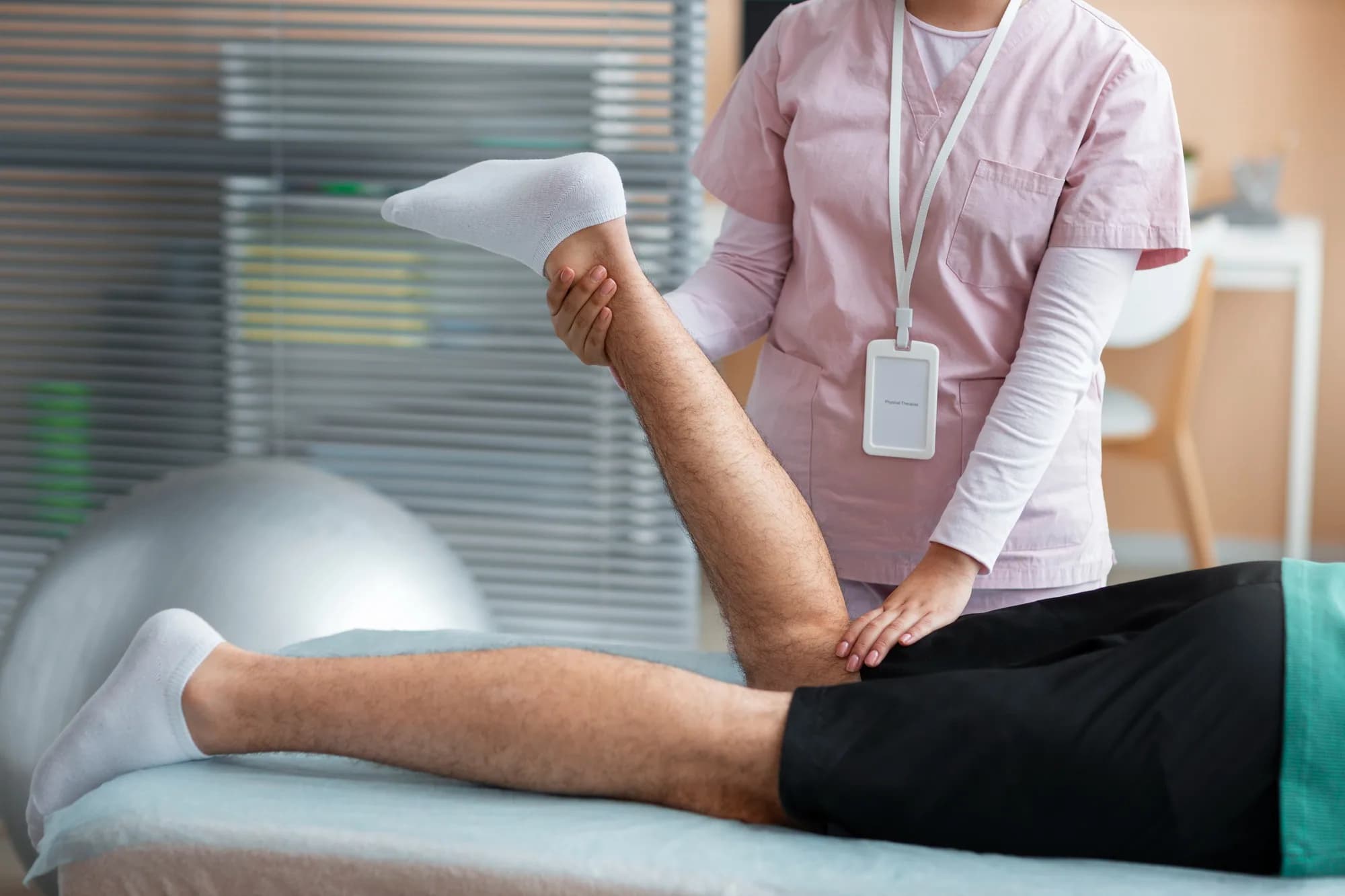
Physiotherapy in Bengaluru for walking difficulty, looking at the cause, the right walking aid and building stamina, at our Akshayanagar clinic or at home.
Walking difficulty can show up in many ways: pain in a hip or knee, legs that feel heavy, feet that catch on the ground, a sense of unsteadiness, or simply having to stop and rest far sooner than before. Because the causes vary so widely, finding out why walking has become hard is the first step.
Our physiotherapists assess the reason behind the problem, advise on whether a walking aid would help, and build stamina gradually. We see patients at our clinic in Akshayanagar and at home in nearby areas of Bengaluru such as Electronic City, Begur and Hulimavu.
Walking depends on healthy joints, strong muscles, working nerves, good balance, and a heart, lungs and circulation able to meet the demand. A problem in any of these can make walking harder. Painful knee or hip arthritis is common, as is weakness after illness. Narrowing in the lower spine can cause leg pain or heaviness that eases on sitting or bending forward. Diabetes can reduce feeling in the feet, and conditions like stroke or Parkinson's disease affect control. Calf pain that comes on with walking and eases with rest may point to poor circulation, which needs a doctor's review.
Physiotherapy starts by separating the possible causes, because the right treatment depends on them. Arthritis-related walking problems often respond to strengthening and pain management, spinal stenosis may ease with specific exercises and posture strategies, and nerve-related unsteadiness needs balance training and foot care. When a medical cause needs investigation, the physiotherapist will say so.
Practical support matters too. Choosing the right walking aid, setting it to the correct height and learning to use it well often makes walking safer from the start. A graded plan then builds stamina, so the distance you can manage slowly grows and outings feel less daunting.
The clinic suits people who can travel and want to improve their walking distance, as there is space to observe walking properly and practise with different aids. A home visit is often better when walking is limited to a few steps, after recent surgery, or when the main concern is moving safely around the house and on household stairs. Some people begin at home and move to clinic sessions once they can walk further.
Not usually. A correctly used aid reduces strain on painful joints and improves safety, which often lets people walk more, not less. As strength and balance improve, the physiotherapist will review whether you still need it, and many people end up using one only outdoors or for longer distances.
There is no single right distance. A good starting point is whatever you can manage comfortably, increased a little every week or so. Mild tiredness is fine, but pain that lingers into the next day suggests you did too much. The physiotherapist will set a plan that suits you.
One common cause is narrowing in the lower spine, where symptoms ease on sitting or bending forward. Another is reduced blood flow to the legs, where calf pain eases after a short rest, even while standing. Both need proper assessment, and the physiotherapist may ask your doctor to check your circulation.
Start with an assessment at the clinic or at home. A session at the clinic is ₹800, and care packs of 5, 10 or 20 sessions bring it down to ₹600 a session.
What the first assessment covers
The home-visit fee depends on where you are, so ask us when you book.
It depends on the reason for the difficulty. A stick suits mild one-sided pain or slight unsteadiness, a quad stick offers more stability, and a walker or rollator helps when balance or strength is more affected. A physiotherapist should assess the need and set the height.
Common causes include knee and hip arthritis, muscle weakness, balance problems, nerve damage from diabetes, narrowing in the lower spine, and conditions such as stroke or Parkinson's disease. Often more than one factor is involved, so a proper assessment is needed.
Often, yes. Building strength, managing pain and following a graded walking plan help many people gradually increase how far they can walk. Progress varies with the underlying cause, and some conditions need medical treatment alongside physiotherapy.
ASA Physiotherapy treats walking difficulty at its clinic in Akshayanagar and through home visits in nearby areas, including Electronic City, Begur and Hulimavu. A home visit can be useful when walking out to a vehicle is itself a struggle.
At the clinic in Akshayanagar, or at home in these areas.
GeriatricFall prevention therapy in Bengaluru with fall risk assessment, strength and balance training and a home hazard review, at our clinic or during home visits.
GeriatricMobility improvement therapy in Bengaluru to make getting up, climbing stairs and reaching easier again, through clinic sessions in Akshayanagar or home visits.
GeriatricJoint stiffness treatment in Bengaluru for stiffness from age, inactivity or arthritis, with range-of-motion work at our Akshayanagar clinic or at home.
Core ServicesPhysiotherapy clinic in Akshayanagar, Bengaluru for careful assessment, hands-on treatment and guided exercise, with home visits for those unable to travel.
Core ServicesHome physiotherapy in Bengaluru for people who find travel hard, with assessment, exercise and family guidance at home, plus clinic visits in Akshayanagar.
 Walking Difficulty Physiotherapy in Akshayanagar: Family Guide
 Mobility Improvement Therapy in Hulimavu: Family Questions
 Joint Stiffness Treatment in Bengaluru: Family Questions
 Fall Prevention in HSR Layout: Questions Families Ask First
 Walking Difficulty: When Symptoms Need Urgent Medical Care
 Elderly Mobility Loss Symptoms: What Slowed Walking Means
Medically Reviewed
This page was reviewed by Dr. David S Bhaktharaj PT, Lead Physiotherapist (BPT, MIAP).
This page is for patient education and appointment planning. It does not replace diagnosis, emergency care, or advice from a treating physician. Read the full medical disclaimer.