



 Geriatric
Mobility Improvement Therapy
Mobility improvement therapy in Bengaluru to make getting up, climbing stairs and reaching easier again, through clinic sessions in Akshayanagar or home visits.
Conditions
Each condition has its own assessment pathway and recovery plan.
Locations
Our clinic is in Akshayanagar, and we visit patients at home in nearby areas.
Clinic
Who you will see, how treatment goes, and how to get in touch.
Patients
Articles and exercise guides for reading up before or between visits.
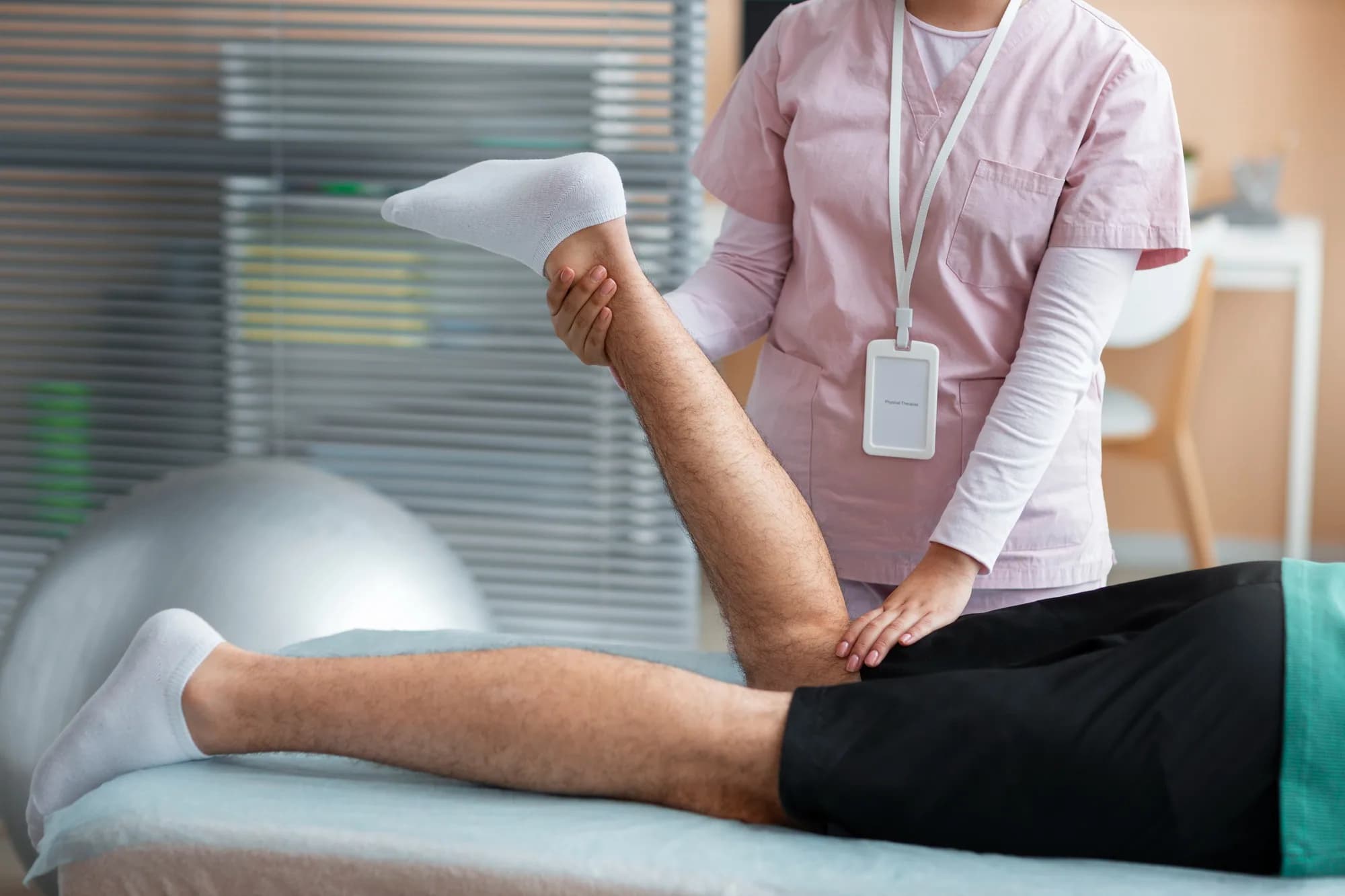
Fall prevention therapy in Bengaluru with fall risk assessment, strength and balance training and a home hazard review, at our clinic or during home visits.
A fall can change an older person's life, even when no bone is broken. Confidence drops, activity reduces, and the resulting weakness makes another fall more likely. The encouraging news is that many causes of falls can be identified and reduced with the right assessment and a structured exercise programme.
Our fall prevention therapy has three parts: finding out why someone is at risk, building strength and balance, and reviewing the home for hazards. We see people at the Akshayanagar clinic and at home in nearby areas of Bengaluru such as Bommanahalli, Devarachikkanahalli and Kalena Agrahara.
Falls rarely have a single cause. Weak leg muscles, slower balance reactions, poor eyesight, numb feet, dizziness on standing and certain medicines, particularly those that cause drowsiness or lower blood pressure, can all add to the risk. Hazards at home, unsuitable footwear and hurrying also play a part. The more of these factors a person has, the higher the risk. Research consistently shows that regular, progressive strength and balance exercise is one of the most effective ways to reduce falls in older adults, especially alongside attention to medicines, vision and the home.
Physiotherapy addresses the physical causes of falls that can be changed. Targeted exercises strengthen the hips, thighs and ankles, sharpen balance reactions and improve walking pattern and confidence. Because the programme is based on each person's assessment, it focuses on their particular weak points, whether that is turning, stairs or standing up at night.
Physiotherapists also look beyond the body. A review of the home, footwear and daily habits often reveals easy changes that remove common triggers. Where medicines, eyesight or dizziness may be involved, the physiotherapist will suggest discussing them with the person's doctor.
The clinic suits people who can travel and are ready for progressive balance training, as there is room to practise walking, turning and stepping safely. A home visit is especially useful for the hazard review, because the physiotherapist can see the real lighting, floors and bathroom layout. It also suits those who have fallen recently or feel too unsteady to travel. Many people combine a home review with clinic-based training.
Yes. Balance depends on muscles, joints, nerves and the brain working together, and all of these respond to practice. With regular, challenging balance exercise, many older adults become noticeably steadier over a few months. The key is consistency, and exercises that gently test your limits without putting you at risk.
Stay calm and check whether you are hurt. If you are, call for help and keep warm while you wait. If not, roll onto your side, get onto your hands and knees, crawl to a sturdy chair and push up slowly. A physiotherapist can practise this with you.
Walking is good for heart health and stamina, but on its own it does little to reduce falls. Fall prevention needs exercises that specifically challenge balance and strengthen the legs. Walking works best as part of a wider programme, and people at high risk should get advice before walking more on their own.
Start with an assessment at the clinic or at home. A session at the clinic is ₹800, and care packs of 5, 10 or 20 sessions bring it down to ₹600 a session.
What the first assessment covers
The home-visit fee depends on where you are, so ask us when you book.
Start with good lighting, especially at night, remove loose mats and clutter, and make sure she wears well-fitting footwear with a good grip. A physiotherapist can then assess her balance and strength and set an exercise programme, which is one of the most effective ways to lower fall risk.
Ageing brings weaker leg muscles, slower balance reactions and changes in vision and sensation. Long-term conditions, several medicines and dizziness on standing add to this. Most falls result from a combination of these factors, which is why a full assessment is useful.
Useful exercises include standing with the feet closer together, heel-to-toe standing and walking, standing on one leg with support nearby, sit-to-stand practice and heel raises. They should be progressed gradually beside something stable. A physiotherapist can choose the right level safely.
Yes. ASA Physiotherapy provides fall risk assessments and balance training at its Akshayanagar clinic and during home visits in nearby areas, including Bommanahalli, Devarachikkanahalli and Kalena Agrahara. A home visit also allows the physiotherapist to review hazards around the house.
At the clinic in Akshayanagar, or at home in these areas.
GeriatricMobility improvement therapy in Bengaluru to make getting up, climbing stairs and reaching easier again, through clinic sessions in Akshayanagar or home visits.
GeriatricPhysiotherapy in Bengaluru for walking difficulty, looking at the cause, the right walking aid and building stamina, at our Akshayanagar clinic or at home.
GeriatricJoint stiffness treatment in Bengaluru for stiffness from age, inactivity or arthritis, with range-of-motion work at our Akshayanagar clinic or at home.
Core ServicesPhysiotherapy clinic in Akshayanagar, Bengaluru for careful assessment, hands-on treatment and guided exercise, with home visits for those unable to travel.
Core ServicesHome physiotherapy in Bengaluru for people who find travel hard, with assessment, exercise and family guidance at home, plus clinic visits in Akshayanagar.
 Walking Difficulty Physiotherapy in Akshayanagar: Family Guide
 Balance and Falls Exercise Safety: A Guide to Safe Movement at Home
 Balance and Fall Recovery Timeline: What to Expect Stage by Stage
 Fall Prevention in HSR Layout: Questions Families Ask First
 Balance Problems and Unsteadiness: Recognizing Fall Risk Symptoms
 Balance and Falls FAQs: Causes, Prevention, and Physiotherapy
Medically Reviewed
This page was reviewed by Dr. David S Bhaktharaj PT, Lead Physiotherapist (BPT, MIAP).
This page is for patient education and appointment planning. It does not replace diagnosis, emergency care, or advice from a treating physician. Read the full medical disclaimer.