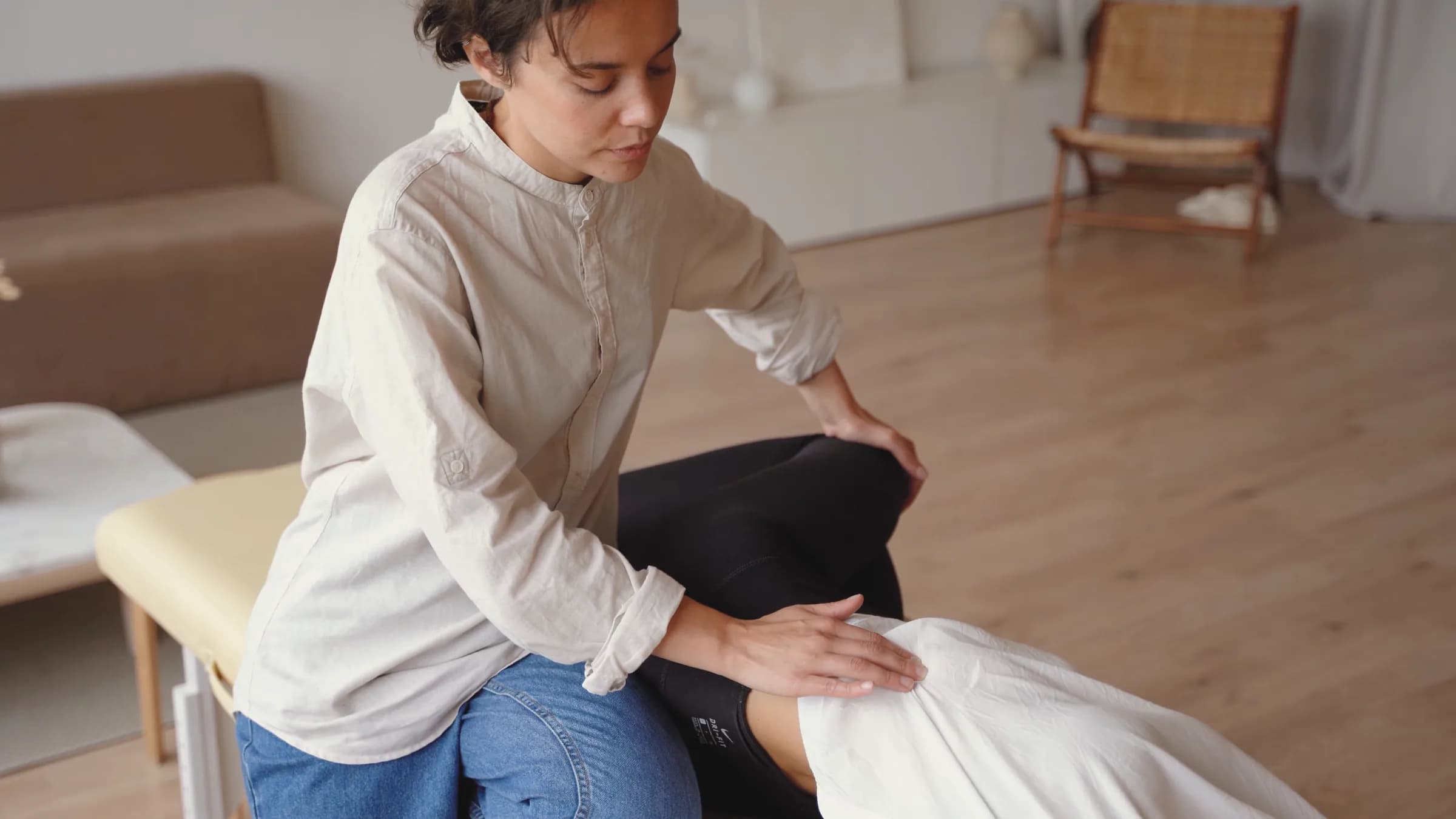
Home physiotherapy or clinic: which do you actually need?
Reviewed by Dr. David S Bhaktharaj PT, Lead Physiotherapist at ASA Physiotherapy Updated
On this page
We get asked this constantly, and the honest answer is that both work well for the right person. What follows is how we actually decide, including the cases where we recommend the clinic to people who asked for home visits.
When home physiotherapy is clearly right
Getting out of the house is the hard part
If travelling causes more pain than the session relieves, home is the answer. This covers most people in the first weeks after surgery, anyone who cannot manage stairs to reach the street, and patients discharged from hospital still building basic strength.
Neurological conditions
After a stroke, or with Parkinson's or multiple sclerosis, the goal is managing your own home — your doorways, your bathroom, your bed height. A therapist who sees those can solve specific problems that never come up in a clinic. Practising transfers on the actual bed beats practising on a plinth.
Elderly patients with fall risk
For fall prevention, seeing the home is most of the value. Loose mats, lighting, bathroom layout, the height of the bed — these are the things that cause falls, and they cannot be assessed remotely.
Bed-bound patients
For someone confined to bed, home visits are the only practical option, and family can be taught positioning and passive movements directly.
When the clinic gives a better result
You need the equipment
Some treatment depends on kit that does not travel: wall bars for supported standing work, a cross trainer and bench for graded loading, resistance equipment for proper progressive strengthening, and electrotherapy such as ultrasound, IFT or TENS. For sports injuries and later-stage rehabilitation this matters a lot — there is a ceiling to what you can load with body weight and a resistance band in a bedroom.
You are in the strengthening phase
Early rehabilitation can happen anywhere. The later phase, where you need heavier and more varied loading, is where a clinic earns its keep. Many patients start at home and move to the clinic once they can travel, which is often the ideal sequence.
Sports injuries
Return-to-sport work needs space, equipment and room to test movement at speed. A front room is not the place to clear someone for cricket.
The honest trade-offs
Home visits cost more. The therapist's travel time is part of the appointment, so a home visit is priced above a clinic session. That is worth factoring in over a course of treatment. Our home-visit fee depends on the area, so it is quoted when you call rather than listed.
Clinics are easier to schedule. Home visits are tied to travel, so there is less choice of time.
Home has fewer distractions than people expect — but it needs a clear space, and family interruptions are real. A corner where you can lie down and move freely is enough.
What does not change
The assessment, the diagnosis, the plan and the standard of treatment are the same in both. The exercises you do between sessions — which is where most of the progress actually comes from — are identical. Anyone who tells you home physiotherapy is inherently inferior is overselling their clinic.
A reasonable way to decide
Ask yourself: does travelling to the clinic cost me more than the session gives back? If yes, start at home. If you can travel without much difficulty and your problem needs loading or equipment, use the clinic. If you are unsure, book an assessment and ask directly — it is a fair question and the answer should not be "whichever you prefer".
We do both from our Akshayanagar clinic, covering Hulimavu, Arekere, Begur, Bannerghatta Road, JP Nagar, BTM Layout and the surrounding areas. See home physiotherapy or call +91 96323 55913 and we will tell you honestly which suits your case.
References
Common questions
Is home physiotherapy as effective as clinic treatment?
For assessment, early rehabilitation, neurological conditions and elderly care, yes, and seeing the home is often an advantage. For later-stage strengthening and sports rehabilitation the clinic is better, because the equipment allows heavier and more varied loading.
How much does a home physiotherapy visit cost?
More than a clinic session, because the therapist's travel time is included. The exact fee depends on the area, so it is quoted when you call rather than published as a single figure.
What space do I need at home for physiotherapy?
A bed or firm surface to lie on and a clear area of floor roughly two metres square, plus a sturdy chair. No special equipment is needed; the therapist brings what the session requires.
Can I switch from home visits to the clinic later?
Yes, and it is a common and sensible progression. Many patients start at home after surgery or a hospital discharge and move to the clinic once travelling is manageable and the programme needs equipment.