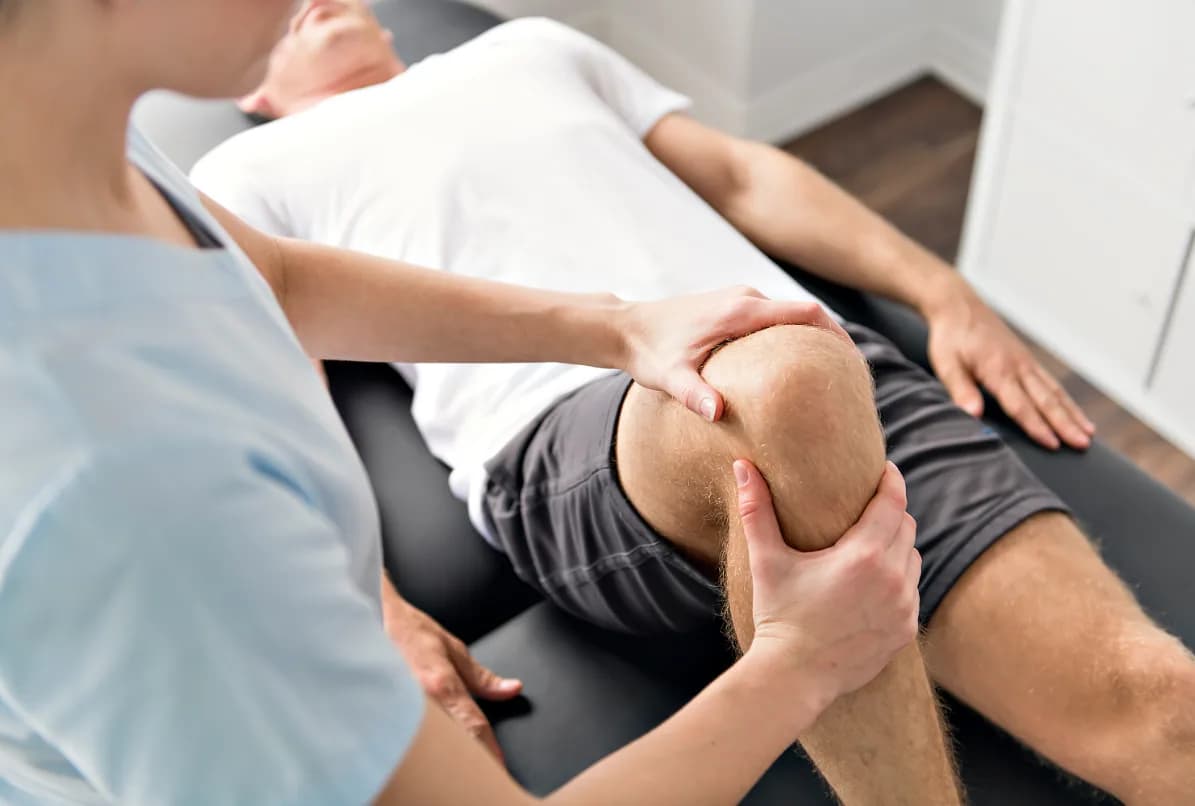
Knee Pain Physiotherapy Costs: What Shapes Your Treatment Plan
Reviewed by Dr. David S Bhaktharaj PT, Lead Physiotherapist at ASA Physiotherapy

On this page
When persistent knee discomfort begins to interfere with walking, climbing stairs, or simple household tasks, starting rehabilitation is often the most effective step forward. However, many individuals and families find themselves wondering how the overall cost of care is calculated and what factors determine the number of sessions required.
Understanding what goes into a rehabilitation plan helps you make informed choices without unexpected expenses. Rather than following a one-size-fits-all package, high-quality physiotherapy tailored to joint conditions depends on your unique diagnosis, day-to-day functional goals, and whether treatment takes place in a clinic or at home.
What Determines the Cost of Knee Physiotherapy?
The total investment in knee rehabilitation varies from person to person. Clinical care is not a uniform product because a runner recovering from an acute ligament sprain has vastly different needs than an older adult managing long-standing knee osteoarthritis. Several primary clinical elements influence the structure and overall expense of care:
- Initial assessment depth: A comprehensive first visit involves physical testing, movement analysis, joint mobility measurements, and an evaluation of surrounding joints like the hips and ankles. This thorough diagnostic baseline requires dedicated clinical time.
- Treatment frequency and duration: While acute pain flares may require two to three visits per week initially, gradual conditioning phases often taper down to weekly or fortnightly check-ins as you become independent with home exercises.
- Complexity of the underlying condition: A mild tendon irritation generally resolves faster than post-surgical rehabilitation following ligament reconstruction or total knee arthroplasty, which demands structured multi-stage protocols over several months.
- Hands-on therapy versus active exercise: Sessions combining skilled manual joint mobilisation, soft tissue techniques, and supervised neuromuscular retraining require focused, one-on-one time with a physiotherapist.
For up-to-date pricing on individual consultations and structured treatment blocks, please review our fees and care packages.
Clinic Visits Versus Home Physiotherapy
Another key consideration influencing care arrangements is where treatment takes place. Patients recovering from severe joint stiffness, acute post-operative limitations, or advanced age may find travelling through heavy city traffic difficult and exhausting.
To support recovery in familiar surroundings, ASA Physiotherapy offers dedicated home visits across Bilekahalli and Arekere and nearby areas of Bengaluru. When a physiotherapist travels to your residence, the consultation reflects the clinician's dedicated travel time, transport overheads, and the convenience of having direct, one-on-one attention without leaving home. Home visits also allow the clinician to assess practical challenges firsthand, such as navigating staircases, low sofa seating, or bathroom transfers.
By contrast, attending sessions at our clinic allows access to dedicated rehabilitation equipment, parallel bars, and varied step heights. Choosing between clinic sessions and home consultations depends on your current mobility level, family support, and scheduling convenience. Many patients begin with home sessions immediately after an injury or surgery, then transition to clinic visits as their walking tolerance improves.
Why Comprehensive Assessment Saves Money Over Time
It can be tempting to seek quick, low-cost passive treatments such as heat packs or brief machine therapy alone. However, addressing only the surface symptoms often leads to recurring flare-ups, repeated medical visits, and unnecessary imaging tests over time.
The knee joint sits between the hip and the foot, which means its mechanics are directly influenced by how your pelvis and ankles move. A thorough clinical assessment identifies the root cause of mechanical overload. For instance, weak gluteal muscles or restricted hip rotation can force the knee to collapse inwards during walking, creating joint irritation. By addressing these related mechanics through targeted hip pain physiotherapy and trunk stability training alongside local knee care, your physiotherapist helps prevent chronic relapses that drive up long-term healthcare expenditure.
A properly structured rehabilitation plan prioritises active exercises that build lasting muscular capacity, allowing you to manage your joint independently rather than relying indefinitely on passive treatments.
How Post-Surgical and Arthritic Knee Needs Differ
Different knee conditions require distinct rehabilitation pathways, which directly affects the timeline and financial planning for care:
Managing Knee Osteoarthritis
Osteoarthritis is a long-term condition characterised by gradual cartilage changes, morning stiffness, and activity-related ache. Care does not aim to "cure" the wear, but rather to unload the joint by strengthening the quadriceps, hamstrings, and calf muscles. Because arthritis management focuses on long-term lifestyle modification and safe joint loading, physiotherapy often involves an initial phase of symptom calming followed by spaced-out reviews to progress your home exercise program.
Post-Surgical Knee Rehabilitation
Recovery following a meniscus repair, ACL reconstruction, or partial or total knee replacement follows tissue healing timelines set by your orthopaedic surgeon. Rehabilitation must pass through distinct phases: protecting the surgical site, restoring passive range of motion, rebuilding muscle recruitment, and eventually training functional balance. Because early joint motion is critical to prevent arthrofibrosis (scar tissue stiffness), post-surgical care often requires consistent, closely monitored visits in the first six to eight weeks.
Families planning for surgical recovery should account for this intensive early phase when organising care schedules and budgeting for treatment.
Making the Most of Your Physiotherapy Investment
Physiotherapy is an active partnership. To achieve the best possible outcomes within a realistic budget, patients can take practical steps to maximise the value of each appointment:
- Commit to your home exercises: Clinical appointments are designed to guide, assess, and progress your movement. The actual biological adaptation in your tendons, cartilage, and muscles occurs through consistent daily performance of prescribed exercises at home.
- Track your symptoms accurately: Note down which activities trigger pain, how long morning stiffness lasts, and how your knee responds 24 hours after exercise. Clear feedback allows your clinician to adjust loading quickly without wasting session time.
- Communicate your practical goals: If your priority is climbing the stairs of your home without discomfort or returning to social badminton, inform your therapist. Setting explicit functional goals ensures treatment stays focused on what matters most to your quality of life.
- Ask questions about self-management: Request clear guidance on ice application, joint pacing, and appropriate footwear so you feel confident handling mild symptom fluctuations on your own.
To learn more about tailored treatment strategies, explore our guide to knee pain physiotherapy in Bengaluru.
When Knee Symptoms Require Urgent Medical Review
While most mechanical knee aches and degenerative joint changes respond well to structured physiotherapy, certain signs indicate serious pathology that requires immediate medical or orthopaedic evaluation. Do not delay assessment if you notice any of the following red flag symptoms:
- Inability to bear any weight on the leg immediately following a fall, twist, or impact injury.
- Visible joint deformity, abnormal limb alignment, or a sensation that the joint has completely dislocated.
- A hot, intensely red, and rapidly swelling knee accompanied by high fever, chills, or systemic illness, which may suggest septic arthritis.
- Sudden, severe calf pain, tenderness, redness, or swelling in the lower leg below the knee, which could indicate a deep vein thrombosis (DVT).
- Sudden numbness, loss of sensation, or a pins-and-needles sensation spreading down into the foot or toes.
- A knee joint that is completely locked mechanically, meaning it cannot be straightened or bent even with gentle assistance.
If you experience any of these symptoms, seek urgent evaluation at an emergency department or consult an orthopaedic specialist before proceeding with routine physiotherapy.
References
Common questions
How many physiotherapy sessions will I need for knee pain?
The number of sessions depends on your specific diagnosis, chronicity, and functional goals. Mild soft tissue strains may require only a few sessions over three to four weeks, whereas post-operative rehabilitation or chronic knee osteoarthritis typically involves several months of phased care and progress checks.
Can I switch from home visits to clinic appointments later?
Yes. Many patients begin with home visits during early post-operative recovery or acute flare-ups when travel is difficult, and then transition to clinic sessions as their walking confidence and joint mobility improve.
Does knee physiotherapy rely entirely on machines?
No. While modalities like heat, ice, or electrical stimulation can provide temporary pain relief, active exercise therapy, manual joint mobilisation, and functional movement retraining form the core of effective, evidence-based knee recovery.
Where can I find current treatment charges?
All current consultation fees, package options, and visit details are listed transparently on our fees and care packages page.