Knee pain physiotherapy for Arekere
Reviewed by Dr. David S Bhaktharaj PT, Lead Physiotherapist at ASA Physiotherapy Updated
On this page
Arekere is one of our closest neighbourhoods, which matters more for knee problems than for most other conditions. Knee rehabilitation works best when sessions are frequent early on and when the later strengthening has proper equipment behind it — both of which are easier when the clinic is a short trip away.
Why knees need equipment eventually
Early knee rehabilitation can happen anywhere: range of movement, basic activation, sit-to-stands from a dining chair. The phase that determines whether the result holds is progressive loading, and that has a ceiling at home.
A knee that needs to tolerate stairs, uneven ground and a full day on its feet has to be loaded accordingly. Our clinic has wall bars, a cross trainer, a bench and resistance equipment for exactly this stage. It is the main practical argument for travelling in once you comfortably can.
What we see from Arekere
A mix, weighted towards two groups. Apartment residents in their forties and fifties with pain on stairs and after long days — usually a loading and strength problem with a good outlook. And older residents with established arthritis, where the goal is function rather than cure: stairs, walking distance, getting out of a chair without help.
A third, smaller group is worth mentioning: people who have had a knee arthroscopy and were told rehabilitation was optional. It rarely is. A knee that has been operated on and not rehabilitated tends to be the one that still aches a year later.
What treatment involves
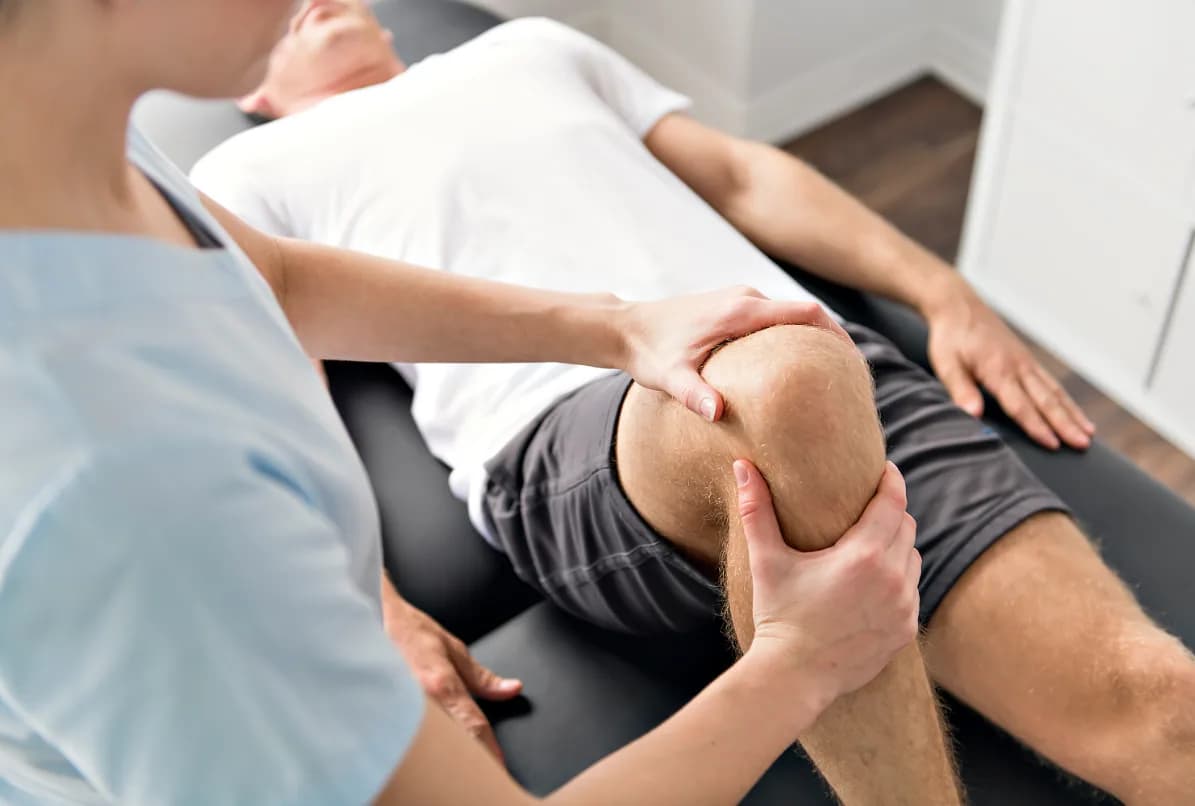
Assessment to establish what is irritated and why, including what the hip and ankle are contributing, since both change how the knee is loaded. Hands-on treatment where stiffness or pain is limiting movement. Then a strengthening programme that progresses deliberately, with the exercises you do at home forming most of the work and the sessions used to check and advance them.
Where pain is limiting participation, IFT, TENS or ultrasound can be used alongside, though never as the whole plan.
If travelling is the problem
For anyone recently operated on, or an older parent who is unsteady, home physiotherapy covers Arekere, and moving to the clinic later is a common and sensible progression.
See knee pain physiotherapy or physiotherapy for Arekere. We have evening and weekend appointments; call +91 96323 55913.
References
Common questions
Can I do knee rehabilitation entirely at home?
The early phase, yes. The later strengthening phase works better with equipment, because a knee that needs to handle stairs and full days on its feet has to be loaded more than a resistance band allows. Many patients start at home and move to the clinic.
I had a knee arthroscopy and was not given rehabilitation. Is it too late?
No. Strengthening helps whether you start at six weeks or six months, though starting earlier is easier. A knee that was operated on but never properly rehabilitated is a common reason for persistent aching long afterwards.
How often will I need to come?
Typically twice a week at first, reducing as you progress and the programme becomes more self-managed. Most of the work happens in the exercises you do between sessions rather than in the sessions themselves.