



 Special Home Care
Physiotherapy for Stroke Patients at Home
Physiotherapy for stroke patients at home in Bengaluru, with caregiver training in safe transfers, positioning and daily routines between visits.
Conditions
Each condition has its own assessment pathway and recovery plan.
Locations
Our clinic is in Akshayanagar, and we visit patients at home in nearby areas.
Clinic
Who you will see, how treatment goes, and how to get in touch.
Patients
Articles and exercise guides for reading up before or between visits.
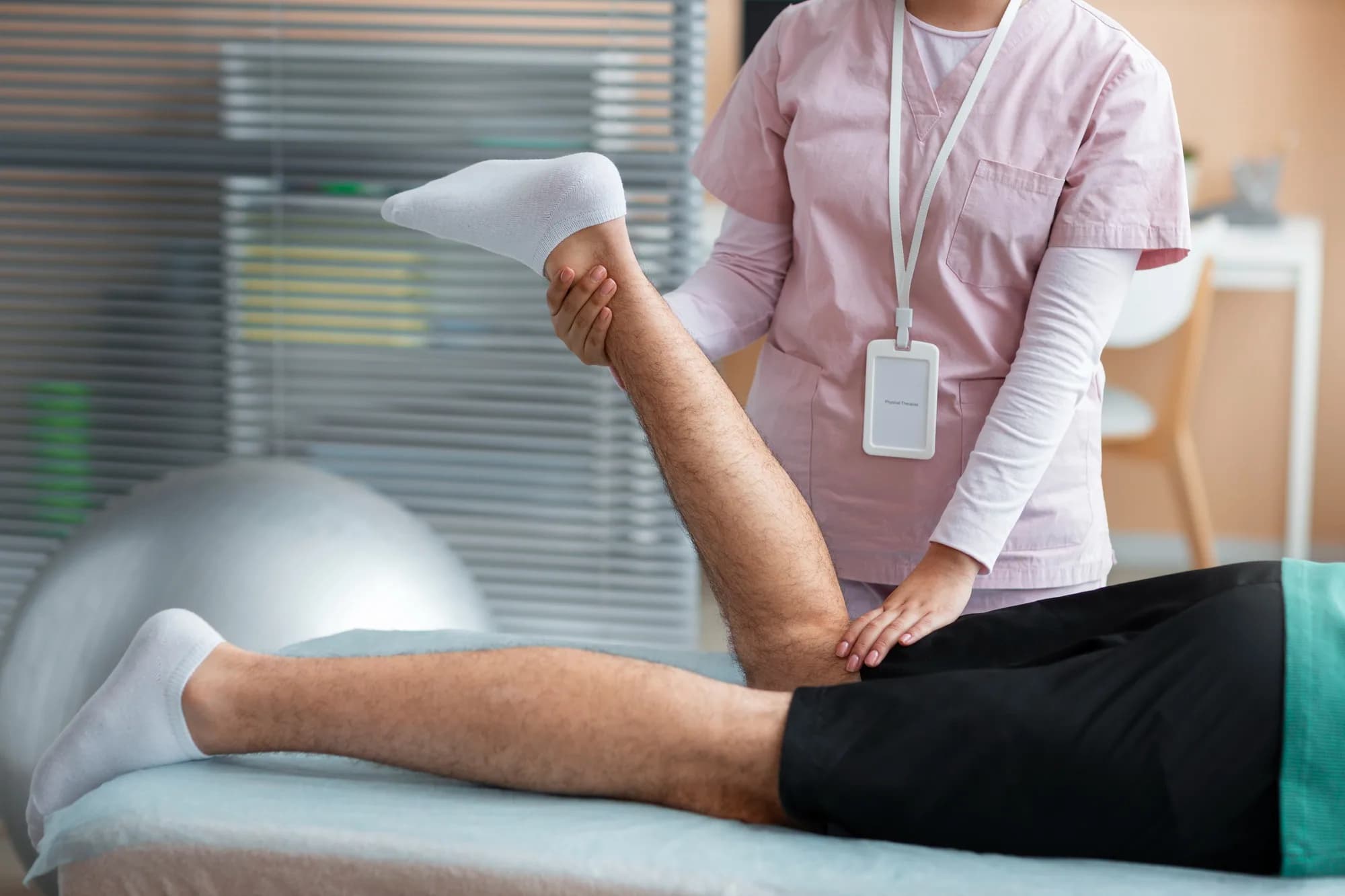
Home physiotherapy for home-bound seniors in Bengaluru, covering safe transfers, home set-up and family training, with clinic visits in Akshayanagar as well.
When an older parent spends most of the day in bed or a single chair, every movement starts to matter. Getting from bed to chair, reaching the toilet and standing long enough to wash become the real goals of therapy. Home physiotherapy works on exactly these tasks, in the rooms where they happen.
Our physiotherapists visit seniors at home in Bengaluru neighbourhoods such as Bilekahalli, Hongasandra and Begur. Alongside exercise, each visit looks at how the home is set up and how family members can help safely, because they provide most of the support between sessions.
Older adults lose strength quickly when they are mostly inactive. A spell in bed after illness or surgery can leave the legs noticeably weaker within a short time, and that weakness makes the next movement harder, so activity drops further. Long periods of lying or sitting also raise the risk of stiff joints, pressure sores, chest infections and blood clots. Physiotherapy at home aims to break this cycle through regular, manageable movement, safer ways of getting up and about, and a home arranged to make each task easier.
For a home-bound senior, small gains make a large difference. Being able to stand with one helper instead of two, or walk to the toilet rather than use a bedpan, protects dignity and eases the load on the family. Regular movement also helps protect the skin, lungs and joints from the effects of long immobility.
Physiotherapy at home turns the household into part of the treatment. Furniture is arranged to support independence, daily routines become practice, and family members learn to guide rather than lift. This steady, shared effort between visits is often what moves recovery forward.
For seniors who are largely home-bound, home visits are usually the practical choice, since the effort of travel can leave little energy for therapy. As strength and walking improve, some patients are able to attend the Akshayanagar clinic, perhaps with a family member, to work on longer walks, stairs and outdoor confidence. The physiotherapist will advise when that move is realistic.
Stay close to the person, bend your knees rather than your back, and let them push up with their own arms and legs while you guide. Avoid lifting their full weight. The physiotherapist will show your family specific techniques for your home and advise on aids if more support is needed.
Yes, although the approach changes. Instructions are kept short and simple, familiar routines are used as exercise, and family members are closely involved. Progress may be slower, but keeping the ability to stand, walk and transfer often makes daily care easier and safer.
It depends on the person's condition and goals. Visits are often more frequent soon after discharge, when changes happen quickly, and spaced out as the family becomes confident with the exercises and transfers. The physiotherapist will suggest a schedule and review it regularly.
Start with an assessment at the clinic or at home. A session at the clinic is ₹800, and care packs of 5, 10 or 20 sessions bring it down to ₹600 a session.
What the first assessment covers
The home-visit fee depends on where you are, so ask us when you book.
Yes. Physiotherapists regularly treat people who spend most of their time in bed. Sessions focus on bed exercises, sitting balance, safe transfers and, when possible, standing and walking. ASA Physiotherapy offers home visits near Akshayanagar, including Bilekahalli, Hongasandra and Begur.
Help them roll onto their side, then lower their legs over the edge while they push up with their arms into sitting. Let them sit for a moment with feet flat before standing, with a firm chair or walker nearby. Avoid pulling on their arms.
Useful changes include a bed at the right height, a firm chair with armrests, a raised toilet seat or grab rail, and a clear, well-lit path to the bathroom. Keeping everyday items within reach also reduces risky stretching and unnecessary trips.
It is often very helpful. Early, regular movement after hip fracture surgery supports the recovery of walking and independence. At home, the physiotherapist can practise transfers and walking in the patient's own space and teach family members how to give support safely.
At the clinic in Akshayanagar, or at home in these areas.
Special Home CarePhysiotherapy for stroke patients at home in Bengaluru, with caregiver training in safe transfers, positioning and daily routines between visits.
Special Home CareHome rehabilitation after surgery in Bengaluru: a safer home set-up, early walking and exercises after discharge, then clinic sessions as you progress.
Special Home CarePhysiotherapy in Bengaluru to rebuild strength, breathing and walking after a hospital or ICU stay for illness, with home visits or sessions at our clinic.
Core ServicesPhysiotherapy clinic in Akshayanagar, Bengaluru for careful assessment, hands-on treatment and guided exercise, with home visits for those unable to travel.
Core ServicesHome physiotherapy in Bengaluru for people who find travel hard, with assessment, exercise and family guidance at home, plus clinic visits in Akshayanagar.
 Elderly Mobility Physiotherapy Costs: A Family Guide
 Post-Hospital Physiotherapy in BTM Layout: Family Questions
 Stroke Rehab at Home in Electronic City: Family Questions
 Elderly Mobility Exercise Safety: A Guide for Families
 Home Exercise Safety: Safe Progression Across Recovery Stages
 Post-Surgery Home Rehab in Electronic City: Family Questions
Medically Reviewed
This page was reviewed by Dr. David S Bhaktharaj PT, Lead Physiotherapist (BPT, MIAP).
This page is for patient education and appointment planning. It does not replace diagnosis, emergency care, or advice from a treating physician. Read the full medical disclaimer.