



 Orthopedic
Back Pain Physiotherapy
Physiotherapy for lower back pain in Bengaluru, from desk-related stiffness to lifting strains, with exercise-led care at our clinic or on a home visit.
Conditions
Each condition has its own assessment pathway and recovery plan.
Locations
Our clinic is in Akshayanagar, and we visit patients at home in nearby areas.
Clinic
Who you will see, how treatment goes, and how to get in touch.
Patients
Articles and exercise guides for reading up before or between visits.

Shoulder pain physiotherapy in Bengaluru for rotator cuff and impingement-type pain, with guided strengthening at our Akshayanagar clinic or at home.
Shoulder pain tends to show up in ordinary moments: reaching for a seatbelt, lifting a pressure cooker onto a high shelf, or rolling onto your side at night. Usually it comes from the rotator cuff tendons and nearby tissues, irritated by more load than they are ready for. This kind of pain often responds well to a structured exercise plan.
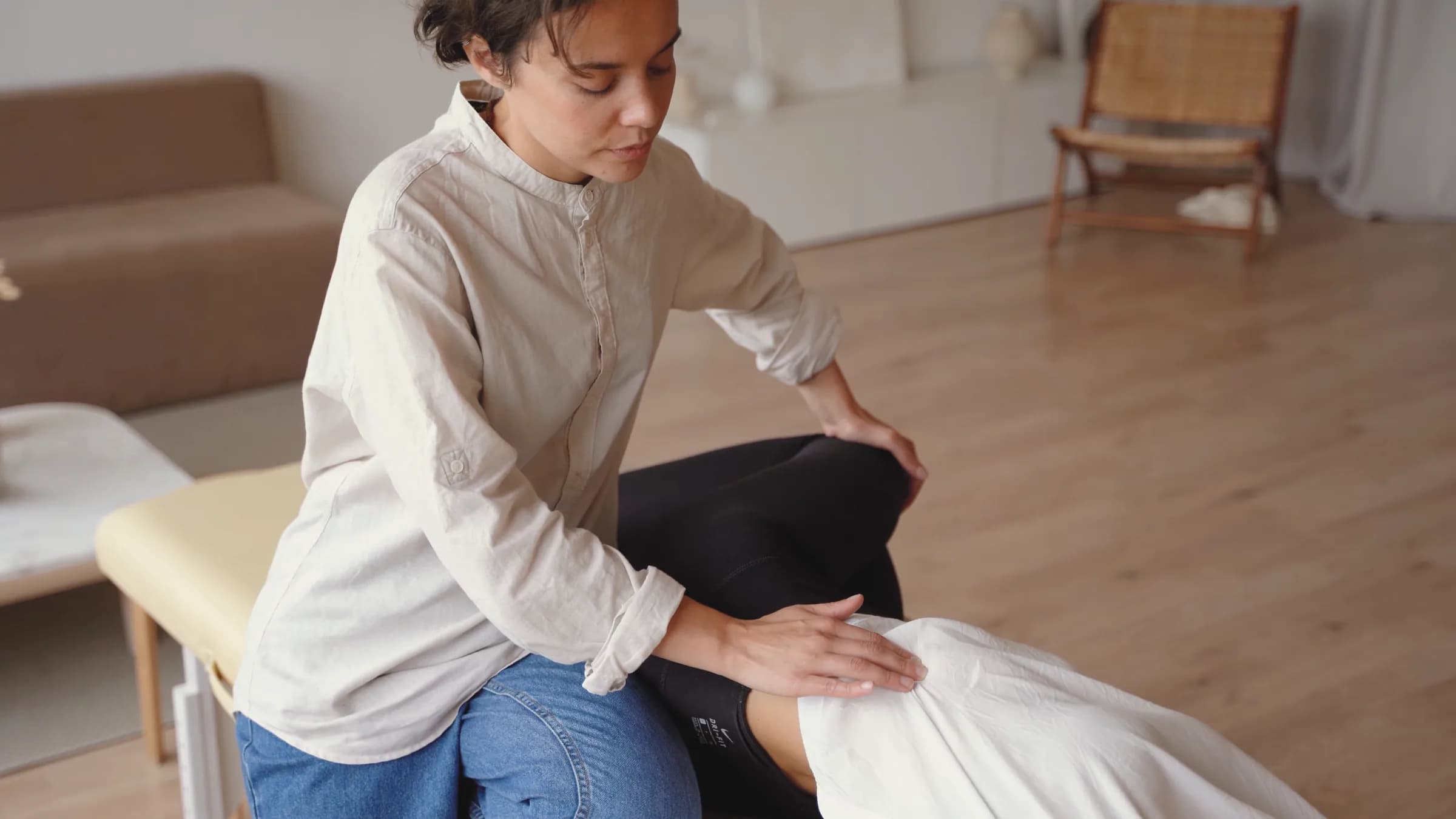
Our physiotherapists assess and treat shoulder pain for people across Bengaluru, including BTM Layout, JP Nagar and HSR Layout. We work out which structures are involved, settle the pain, then gradually rebuild strength for work, sport and everyday home life. You can be seen at our Akshayanagar clinic or at home.
The rotator cuff is a group of four muscles and tendons that keep the ball of the shoulder centred in its socket as the arm moves. When these tendons, or the bursa above them, are loaded beyond their capacity, they become painful. Clinicians call this rotator cuff related shoulder pain, and you may also hear impingement, tendinopathy or bursitis. Pain is usually felt around the upper arm. Unlike frozen shoulder, the joint often still moves well when someone else lifts the arm, even though lifting it yourself hurts.
Most rotator cuff and impingement-type pain is a load problem: the tendons are being asked to do more than they can currently handle. Physiotherapy starts by finding a better balance between load and recovery. The physiotherapist identifies which movements provoke pain, adjusts your daily and work tasks, and may use hands-on techniques or taping for short-term relief while the irritated shoulder gradually settles.
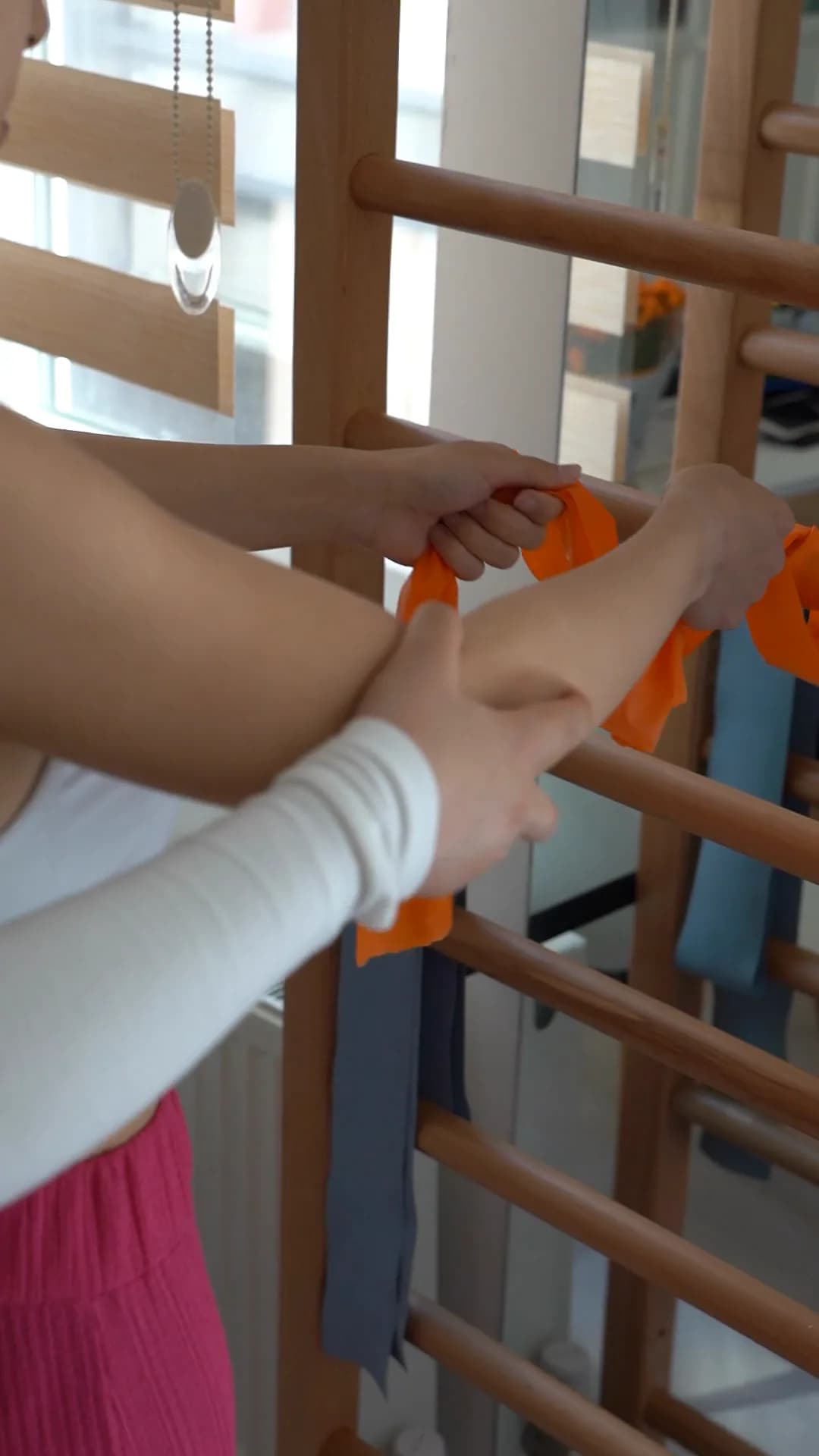
The main treatment is progressive strengthening. Exercises for the rotator cuff and the muscles that control the shoulder blade are built up gradually over several weeks, so the tendons and muscles become more tolerant of load. Research consistently supports exercise as the first choice for this kind of shoulder pain, and it is usually recommended before injections or surgery are considered.
A clinic visit suits most shoulder pain, because strengthening often needs bands, weights and space to practise overhead movements. A home visit is sensible if pain after an injury makes travel hard, if you are caring for someone at home, or if an older adult needs help setting up safe exercises in their own space.
Often not at first. Scans frequently show tendon changes in people with no pain, so results do not always explain symptoms. A careful examination usually guides early treatment. Your doctor may arrange a scan after significant injury, marked weakness, or poor progress despite good rehabilitation.
It varies. Many people notice improvement within six to twelve weeks of consistent exercise, while longer-standing problems may take several months. Progress is rarely a straight line, and short flare-ups are common. The physiotherapist adjusts the programme as you go.
Not usually. Most people can keep training by changing the exercises that aggravate the shoulder, reducing weight or range on pressing and overhead lifts, and continuing lower-body work. The physiotherapist helps you decide what to adjust for now and how to return to full sessions.
Start with an assessment at the clinic or at home. A session at the clinic is ₹800, and care packs of 5, 10 or 20 sessions bring it down to ₹600 a session.
What the first assessment covers
The home-visit fee depends on where you are, so ask us when you book.
Impingement-type pain usually means irritated tendons or bursa, often with reasonable strength. A tear is a structural break in a tendon, which may cause weakness, especially after injury. Many small tears still respond to exercise, and an assessment guides next steps.
Lying on the painful side compresses irritated tendons and the bursa, which commonly increases pain. Hugging a pillow, lying on the other side or propping the arm can help. Severe, constant night pain with other symptoms should be checked by a doctor.
ASA Physiotherapy has its clinic in Akshayanagar and also offers home visits in nearby areas including HSR Layout, BTM Layout, JP Nagar and Bommanahalli. You can choose a clinic or home visit, whichever suits your pain and schedule.
Posture alone is rarely the whole story. Sitting in one position for long periods, with little movement or strength work, may add to discomfort. Varying positions, taking breaks and building shoulder strength usually help more than holding one perfect posture.
At the clinic in Akshayanagar, or at home in these areas.
OrthopedicPhysiotherapy for lower back pain in Bengaluru, from desk-related stiffness to lifting strains, with exercise-led care at our clinic or on a home visit.
 Orthopedic
Knee pain physiotherapy in Bengaluru for front-of-knee pain, overuse strain and age-related stiffness, with care at our Akshayanagar clinic or at home.
 Orthopedic
Hip pain physiotherapy in Bengaluru for tendon, joint and referred pain, with a clear diagnosis and non-surgical plan at our clinic or on a home visit.
 Orthopedic
Ankle sprain physiotherapy in Bengaluru with balance retraining and strength work to help prevent repeat sprains, at our clinic or through home visits.
OrthopedicLigament injury rehabilitation in Bengaluru for knee, wrist, thumb and other sprains, paced to each stage of healing, at our clinic or on a home visit.
 Shoulder Pain Exercise Safety: Protecting Your Joint During Movement
 Shoulder Pain Recovery Timeline: Healing Stages and Care
 Shoulder Pain Symptoms: What Dull Aches and Sharp Catching Mean
 Shoulder Pain in Hulimavu: When to Seek Urgent Care
 Shoulder pain physiotherapy in Akshayanagar
 Neck and shoulder pain physiotherapy for Electronic City
Medically Reviewed
This page was reviewed by Dr. David S Bhaktharaj PT, Lead Physiotherapist (BPT, MIAP).
This page is for patient education and appointment planning. It does not replace diagnosis, emergency care, or advice from a treating physician. Read the full medical disclaimer.