Physiotherapy at home after surgery in Begur
Reviewed by Dr. David S Bhaktharaj PT, Lead Physiotherapist at ASA Physiotherapy Updated
On this page
Begur is more spread out than the areas closer to the clinic, and for someone a fortnight past a knee or hip operation, that distance is not a detail — it is the reason rehabilitation quietly does not happen.
The weeks that decide the outcome
After joint surgery, the range of movement you gain in the first twelve weeks is largely the range you keep. Scar tissue forms around the new joint early and sets according to how much you are using it. Movement not won in that window becomes considerably harder to win later.
So the period when travel is hardest is the period when consistent work matters most. That mismatch is the single best argument for home-based rehabilitation after surgery.
What home rehabilitation covers
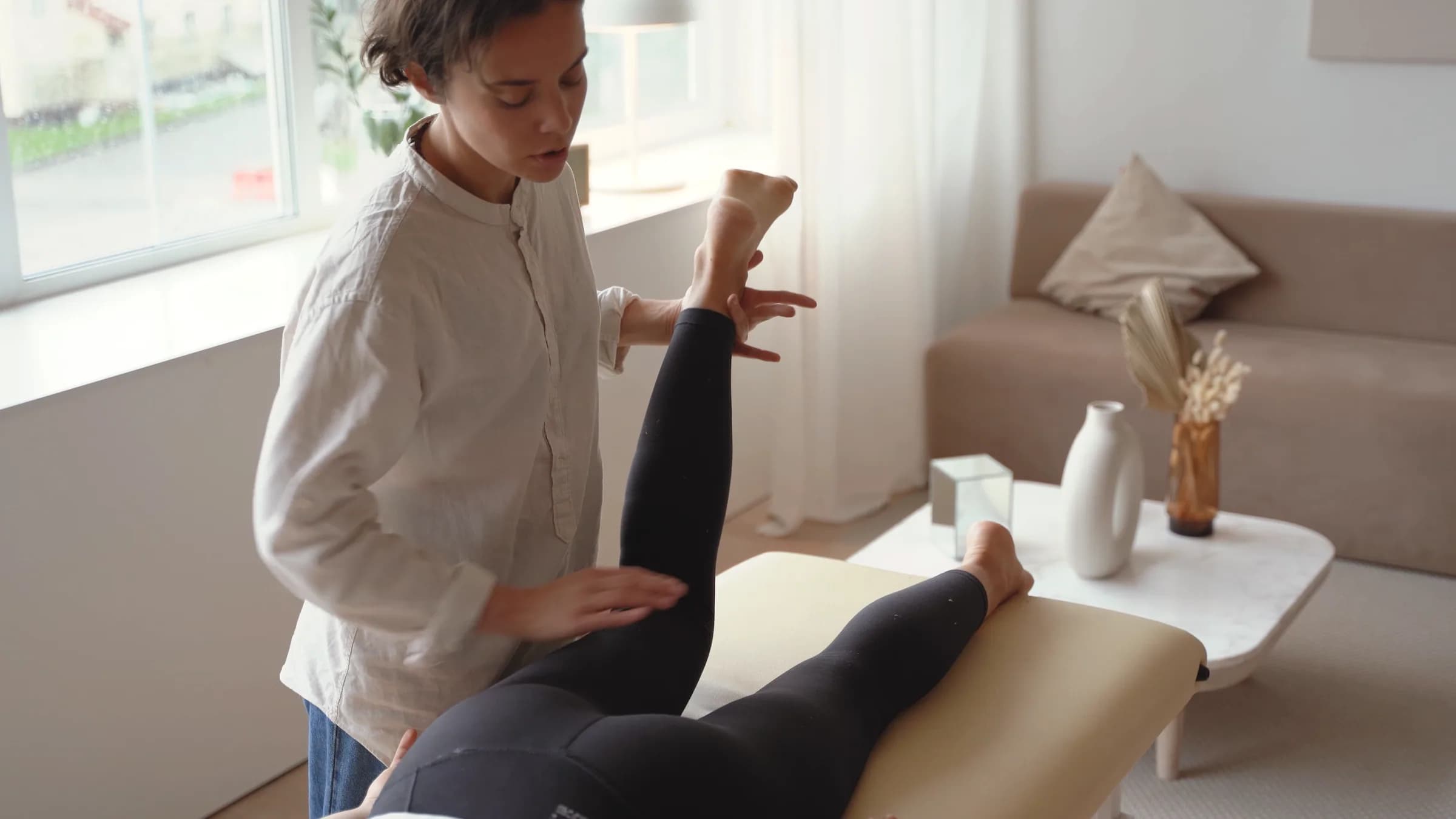
- Safe transfers — bed to chair, chair to standing, in and out of the bathroom, practised on your own furniture rather than a plinth.
- Range of movement work, which after a knee operation means both bending and, just as importantly, full straightening.
- Progressive strengthening, starting with activation and moving to loaded work as healing allows.
- Walking and stairs on your actual steps, which is what you will be using every day.
- Family guidance on what help to give and, more usefully, what help to withhold.
We follow your surgeon's protocol
Surgical protocols differ, particularly on weight-bearing and on how soon a joint may be loaded. Have the operation note or discharge summary available at the first visit. Where a surgeon has set a restriction, we work within it rather than around it.
Warning signs to act on
Contact your surgeon or seek medical care for increasing redness and warmth around the wound, fever, discharge from the wound, calf pain and swelling, or sudden breathlessness. Rehabilitation continues around a normal recovery, but these are not part of one.
Moving to the clinic
Once travelling is comfortable, the clinic becomes the better place for the strengthening phase — wall bars, a cross trainer, a bench and resistance equipment allow loading that a bedroom cannot match. Most post-surgical patients from Begur follow that path: home for the first weeks, clinic from roughly six to eight weeks onwards.
See home rehabilitation after surgery, post-surgery rehabilitation, or physiotherapy for Begur. Call +91 96323 55913.
References
Common questions
How soon after surgery should physiotherapy start?
Usually within days rather than weeks, following your surgeon's protocol. Early movement protects range and reduces complications, and the first twelve weeks largely determine the final result after joint surgery.
Do you follow the hospital's rehabilitation protocol?
Yes. Protocols vary between surgeons, particularly on weight-bearing and loading. Bring the operation note or discharge summary to the first visit so the programme matches what your surgeon has specified.
When should I move from home visits to the clinic?
Usually once travelling is comfortable and the programme needs equipment, often around six to eight weeks after joint surgery. The strengthening phase benefits from proper loading that is hard to reproduce at home.