Slipped disc physiotherapy in Akshayanagar
Reviewed by Dr. David S Bhaktharaj PT, Lead Physiotherapist at ASA Physiotherapy
On this page
Few phrases frighten people more than "slipped disc", and few are more misleading. Discs do not slip. The outer ring can bulge or tear, allowing the softer inner material to press outward, sometimes against a nerve root. That is a meaningful problem, but it is not a disc sliding out of place, and it is rarely permanent.
The thing most people are not told
Disc bulges are extremely common in people with no pain whatsoever. Studies scanning pain-free volunteers find disc changes in a large proportion, rising steadily with age. So a scan showing a bulge does not establish that the bulge is causing your symptoms — the clinical picture has to match.
This matters practically. People shown an alarming report often stop moving, brace permanently and avoid activity for years, which weakens exactly the muscles that protect the spine and makes everything worse.
What actually indicates nerve involvement
Not the scan: the symptoms. Pain travelling down the leg past the knee, pins and needles, numbness, or weakness such as a foot catching on steps. An assessment tests reflexes, sensation and strength to establish which nerve root, if any, is affected — which is the information that shapes treatment.
Most settle
The majority of disc-related symptoms improve substantially within six to twelve weeks with conservative treatment. Disc material reabsorbs over time, and larger extrusions often reabsorb more completely than small bulges. Surgery is reserved for cases that do not settle, or where there is progressive weakness.
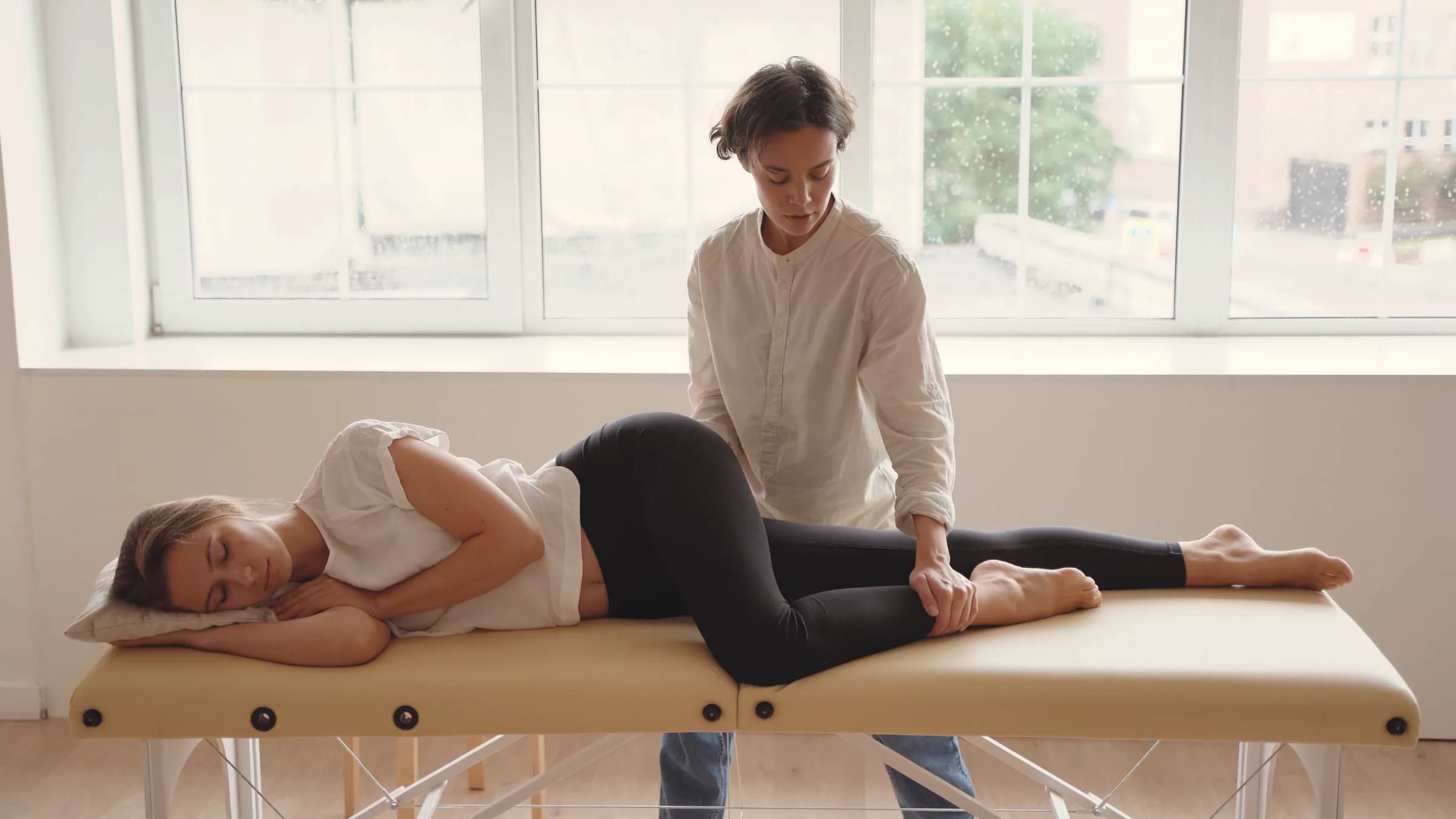
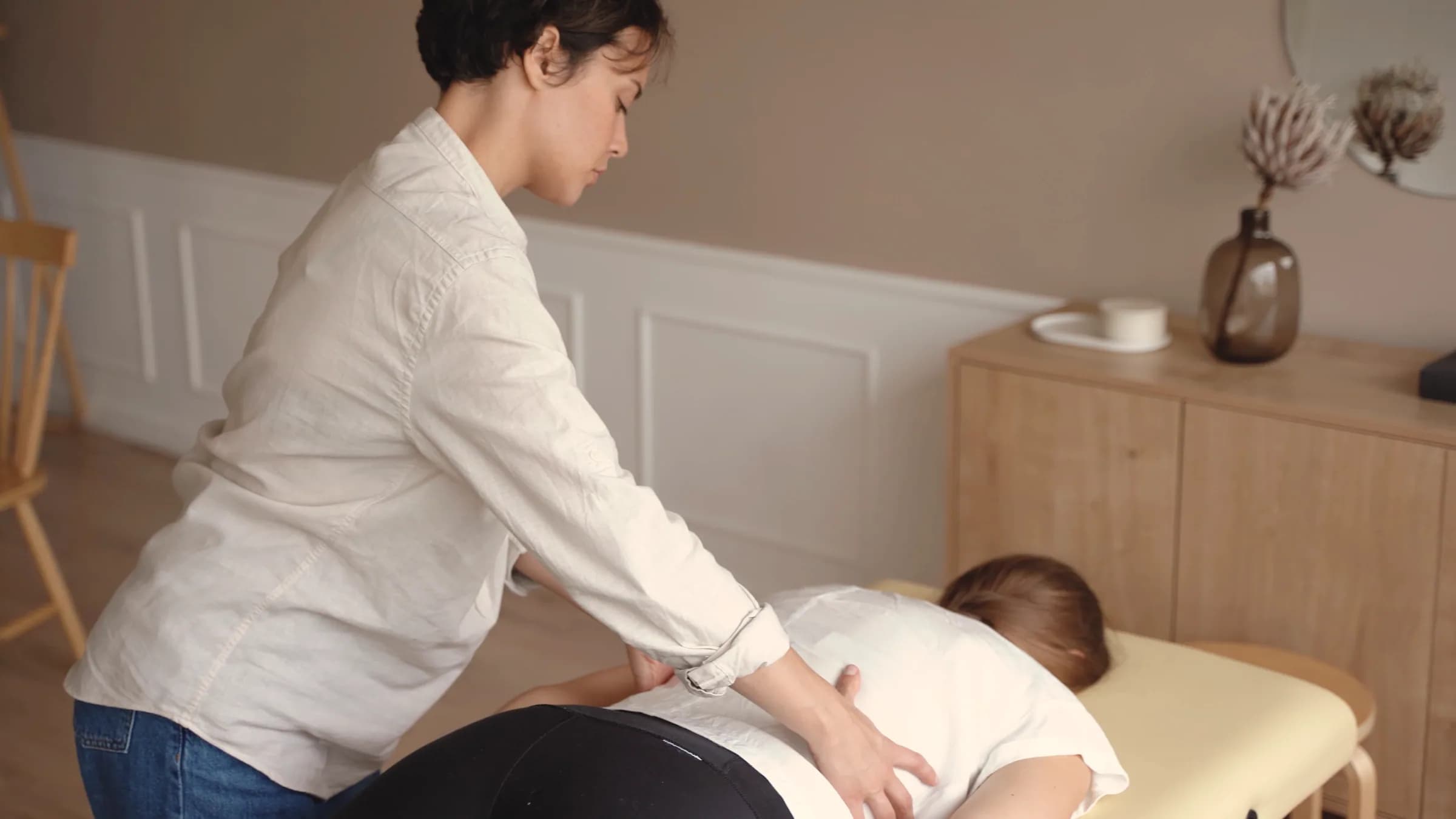
What treatment involves
- Finding your directional preference. Many people have a movement that reduces the leg pain, commonly backward bending, and another that aggravates it. Establishing which you are is most of the early plan.
- Managing sitting. Sitting raises disc pressure, so breaking it up every 20 to 30 minutes usually helps more than any exercise in the first fortnight.
- Keeping active. Short, frequent walks beat bed rest, which makes disc symptoms worse.
- Progressive strengthening once symptoms allow, which is what reduces recurrence.
Red flags
Seek emergency care the same day for numbness around the groin, genitals or inner thighs, loss of bladder or bowel control, inability to pass urine, or weakness in both legs. Seek prompt review for leg weakness that is clearly worsening day by day.
Locally
Our Akshayanagar clinic has evening and weekend appointments, which helps in the early weeks when frequent short sessions beat occasional long ones. During the acute phase, when a car journey is genuinely painful, home visits are available across 560114.
See slipped disc physiotherapy, spine rehabilitation, or physiotherapy in Akshayanagar. Call +91 96323 55913.
References
Common questions
Can a slipped disc heal without surgery?
In most cases yes. The majority of disc-related symptoms settle substantially within 6 to 12 weeks with conservative treatment, and disc material reabsorbs over time. Surgery is reserved for cases that do not settle or that involve progressive weakness.
My MRI shows a disc bulge. Is that definitely causing my pain?
Not necessarily. Disc bulges appear on the scans of a large proportion of people with no pain at all, and become more common with age. The symptoms and examination have to match the scan before the bulge is assumed to be the cause.
Should I avoid bending and lifting permanently?
No. Long-term bracing and avoidance weaken the muscles that protect the spine. Activity is modified during the painful phase, then progressively reintroduced, including bending and lifting, which is what reduces the chance of recurrence.