


Back pain physiotherapy in Akshayanagar
Reviewed by Dr. David S Bhaktharaj PT, Lead Physiotherapist at ASA Physiotherapy
On this page
Back pain is the single commonest reason people come to our Akshayanagar clinic, and the reassuring part is that the great majority of it is mechanical — a problem of load, movement and strength rather than of damage.
What an assessment establishes
Three things, in order. Whether a nerve is involved, which changes the plan considerably. Which movements provoke and which ease your pain, because people differ and the exercises follow that answer rather than a template. And what is contributing from elsewhere — stiff hips and a stiff upper back both leave the lower back doing work it was not built for.
Mechanical back pain versus nerve pain
Mechanical pain is a broad ache across the lower back, sometimes into the buttocks, that you would describe with a whole hand. It varies with position, dislikes sustained postures and usually eases with movement.
Nerve pain follows a line down the leg, often past the knee, described with one finger and different words — burning, electric, shooting. It often brings pins and needles or numbness, and typically worsens with sitting, coughing and bending forward. If that is your pattern, read sciatica treatment and slipped disc physiotherapy, which need a different approach.
What treatment involves
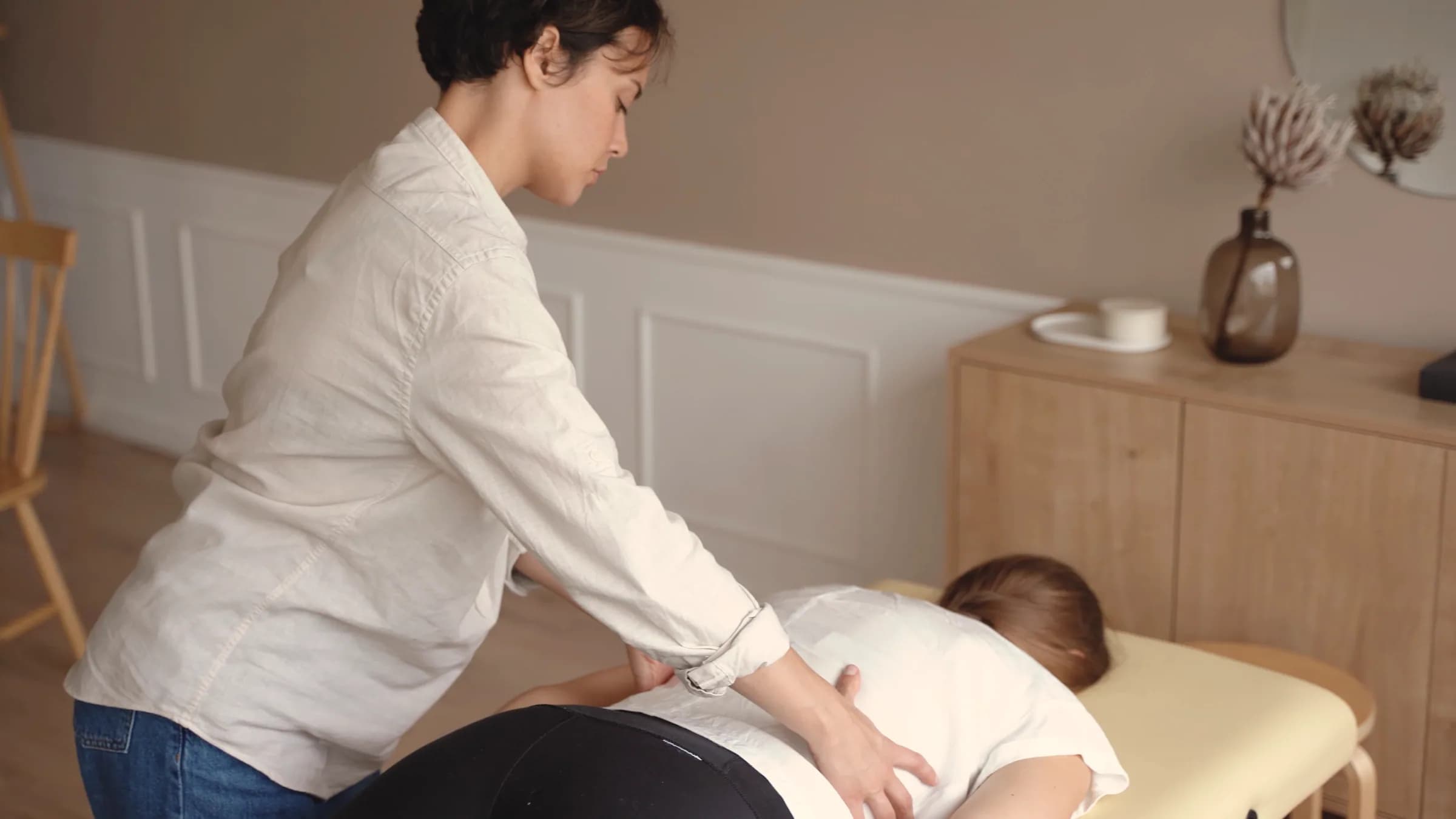
Hands-on treatment to the stiff, irritated segments usually gives relief quickly, which matters when you have been uncomfortable for months and are sceptical that anything will help. But the lasting change comes from strengthening — building a back and hips that tolerate sustained positions instead of objecting to them.
The clinic has wall bars, a bench, dumbbells and resistance equipment, which is what the later phase actually needs. Early work can be done anywhere; the phase that stops a problem returning needs genuine load.
Where pain is limiting participation, IFT, TENS or ultrasound may be used alongside the exercise — never as the whole plan.
How long it takes
Recent back pain without nerve symptoms often improves noticeably within two to four sessions and settles over four to six weeks. Long-standing pain takes longer, because months of guarding weaken the muscles that protect the spine and that strength has to be rebuilt.
What to do today
- Keep moving within comfort. Bed rest beyond a day makes back pain worse, not better.
- Break up sitting every 20 to 30 minutes, whatever your posture.
- Use heat for stiffness, and do your exercises while it is comfortable.
- Do not wait three months. Early problems need fewer sessions.
When not to wait at all
Seek emergency care the same day for numbness around the groin or inner thighs, loss of bladder or bowel control, or weakness in both legs. See a doctor first for back pain with fever, unexplained weight loss, or pain that is constant and unrelated to movement.
Booking in Akshayanagar
We are at No 13, 1st Floor, 101, Sugama Layout, Nayapanahalli, Akshayanagar 560114, with evening and weekend appointments. Home visits are available locally if sitting in a car is currently the worst thing you do all day.
See back pain physiotherapy or physiotherapy in Akshayanagar. Call or WhatsApp +91 96323 55913.
References
Common questions
How many sessions will back pain need?
Recent back pain without nerve symptoms usually improves within 2 to 4 sessions and settles over 4 to 6 weeks. Long-standing pain needs longer, because the strength lost to months of guarding has to be rebuilt before the pain reliably stays away.
Should I rest my back or keep moving?
Keep moving within comfort. Bed rest beyond a day or two slows recovery and weakens the muscles that support the spine. Reduce the aggravating activity rather than stopping everything.
Do I need an MRI for back pain?
Usually not. Guidance advises against routine early imaging, because disc changes appear on the scans of many people with no pain at all and the result rarely changes treatment. Imaging matters if symptoms persist, worsen or involve progressive weakness.


